
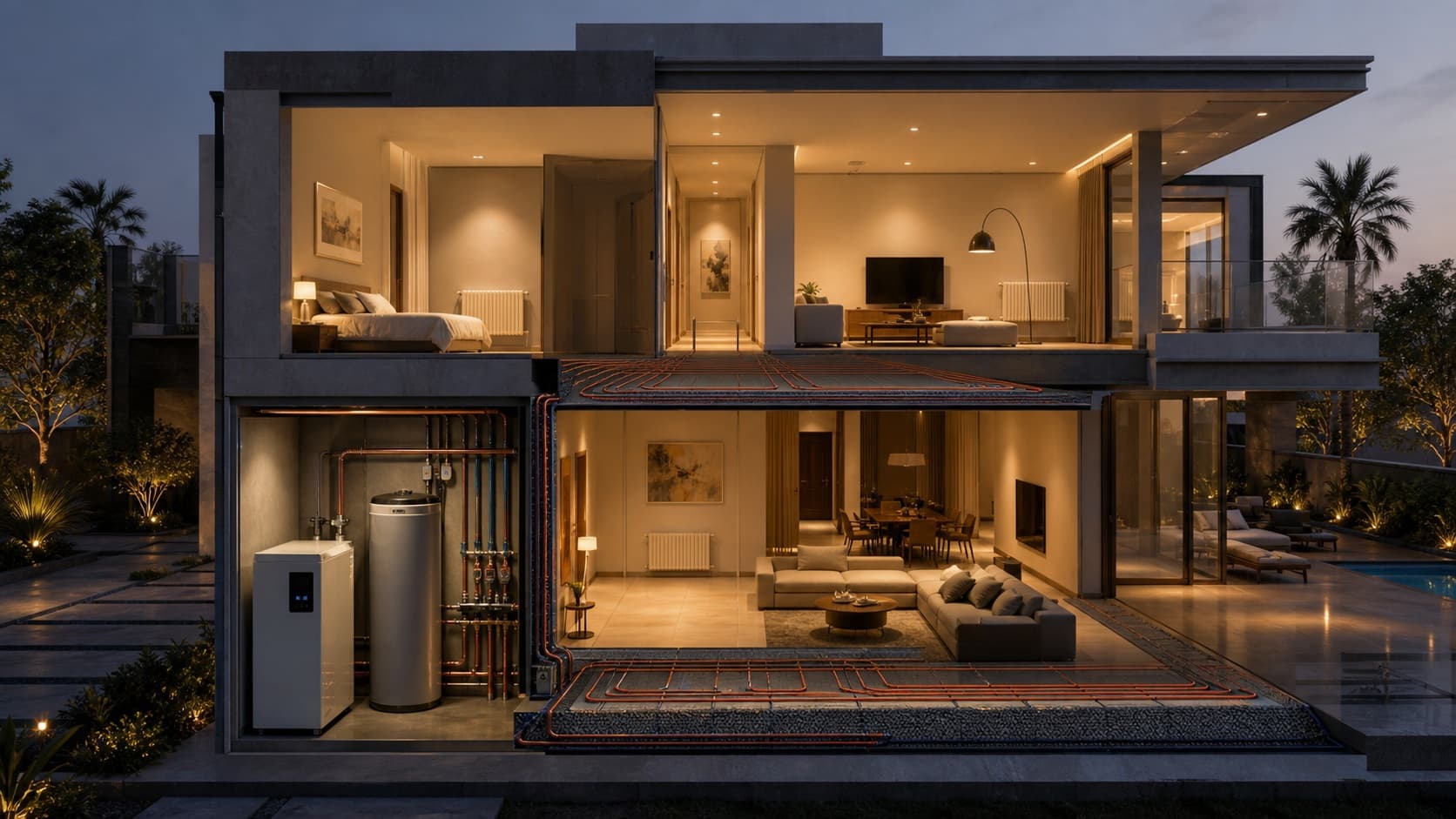
A central heating system warms your whole home from a single source — a natural-gas boiler — instead of relying on separate heating devices scattered room by room. The boiler heats water and distributes it to the home's heating units (wall heaters, underfloor heating, or a bathroom towel radiator), giving you unified, controllable warmth instead of a patchwork of separate heaters and appliances in every room.
The basic idea is simple: one heat source, one distribution network, and every room gets its share of warmth through a dedicated unit connected to it. That's a fundamentally different approach from the "every room has its own standalone device" pattern most homes in Egypt currently rely on, whether that's air conditioners or portable electric heaters.
What the system is made of
At the heart of the system is the boiler: it heats water using natural gas and pumps it through a closed pipe network that reaches every heating unit in the home, without that water ever mixing with drinking water. The boiler's quality is what determines how stable the whole system stays over the long run — see the available models in Ariston gas boilers.
From the boiler, hot water is distributed to whichever heating units you choose:
- Wall-mounted heaters: units mounted on the wall that give each room fast warmth with independent control — every room can turn its own heater on or off without affecting the rest of the house. (Wall-mounted heaters)
- Underfloor heating: a hidden network of pipes under the floor that spreads warmth evenly across the whole space with no visible radiators on the walls. (Underfloor heating)
- Towel radiators: warm the bathroom and dry towels at the same time, connected to the same boiler network as any other heating unit. (Towel radiators)
How the water actually moves through the system
The same water circulates in a closed loop between the boiler and the heating units and back again, without ever being consumed or mixed with the household's everyday water supply. When that water reaches a wall heater or the underfloor pipes, it releases its heat into the surrounding air or floor, then returns to the boiler to be reheated and continue the cycle. This cycle keeps running for as long as the system is on and heat is needed, which is what gives the whole home a steady, even warmth instead of the on-and-off fluctuation you get from separate standalone devices.
Why one system instead of scattered solutions
A single source (the boiler) feeds every heating point in the home, so there's no duplicated equipment and no scattered consumption across separate devices each running on their own. Each unit controls its own space, so you only heat the room you're actually using instead of warming empty rooms too. This is different from instant water heaters, which serve only a single point of use (like one kitchen or one bathroom) — if you just need fast hot water at one point without a full heating network, that's a different context entirely, with a different solution like instant gas water heaters.
Wall heating vs. underfloor heating
The choice between wall and underfloor heating mostly comes down to the state of your home's finishing, not personal preference alone. Underfloor heating needs pipes installed beneath the floor before tiling, so it's easiest and cheapest when done during initial finishing or a full renovation that includes lifting the floors. In a property that's already finished, wall heaters are usually the more practical option because they don't require breaking into the floors — installation is faster and less disruptive to existing finishing. You can also combine both: underfloor heating in specific areas (the living room, for example) and wall heaters in the rest of the rooms.
There's also a difference in the everyday feel of the warmth. Underfloor heating spreads heat evenly from the ground up across the whole space, so there's no hot spot near the radiator and cold spot far from it, which can sometimes happen with wall heaters. In exchange, wall heaters respond faster when you turn them on or off, since they don't need to heat an entire floor first. The decision ultimately comes down to what finishing is available and what you prioritize — faster response or more even distribution.
Controlling each room independently
Every heating unit connected to the boiler network can be controlled separately from the rest, either by turning that unit on or off directly or with a thermostat dedicated to that room. That means you can heat the room people are actually in and leave an empty room as it is, without affecting the rest of the house. This flexibility is the biggest practical difference between an organized central system and a collection of scattered heating devices each running independently.
Why central heating is different from air conditioners on heat mode
Many homes try to heat themselves using air conditioners set to heating mode, and that does work, but on a completely different logic. Each air conditioner serves one room with its own separate cooling-unit power source, so there's no coordination between units and no central source you control all at once. Central heating works the opposite way: one source feeds every unit, and each unit draws from the same shared network rather than acting as an independent standalone device. This difference matters if your home is large or if you use heating heavily every day through the winter, since coordinating from a central source is easier than managing scattered devices that each have their own separate controls.
Routine maintenance is part of the system, not an add-on
A gas boiler, like any appliance that runs continuously through the whole winter, needs regular inspection to keep running efficiently and safely — a gas leak or a combustion fault isn't something to wait on until it gets worse. If your system is already installed and needs checking or servicing, there's a clear path for that in periodic maintenance.
Who this system fits
Central heating suits villas and buildings that want comprehensive, organized heating, especially in areas with cold winters and long daily heating use rather than just occasional cold days. If your home genuinely needs whole-house heating and you want to compare the available options before deciding, the details get worked out during the inspection based on your home's area, number of rooms, and finishing stage.
On the other hand, a small apartment or limited seasonal use won't benefit as much from a full system — simpler solutions can cover that need without committing to a complete heating network. The real deciding factor is the size of the home and how consistently it's used, not just wanting "better heating" in general.
One thing worth knowing before you decide
A central heating system is a whole-home decision, not a single simple appliance purchase. Choosing the right boiler, the pipe routing, and where each heating unit goes are all details that need an actual engineering inspection on-site, not a remote estimate. Homes differ in finishing, area, and number of rooms, which is why every case gets worked out on its own instead of us giving you one generic number that fits every home.
The next step
The right system for your home depends on its area, number of rooms, and finishing stage — there's no single answer that fits every home. Try the heating advisor to find the system that fits your case in under a minute, then book a free inspection and we'll confirm the details on-site.
Frequently Asked Questions
Does central heating need a boiler?
Yes, the boiler is the source that feeds every heating unit (wall or underfloor) in the home from one place.
Can I choose just one heating type?
Yes, you can start with wall heaters or underfloor heating depending on your needs and finishing, or even combine both in different areas — we work that out during the inspection.
Can underfloor heating be added to an existing apartment?
It's easier and cheaper when done during finishing or a full renovation that includes the floors; in an existing property without renovation, wall heaters are usually the more practical option — an engineering inspection confirms what fits your case.
Does the system need regular maintenance?
Yes, the boiler runs continuously through winter and needs periodic inspection to stay safe and efficient, like any gas appliance in constant use.
What's the difference between this and an instant gas water heater?
An instant gas water heater serves a single point of use (like one bathroom or kitchen), while a central heating system feeds a whole network of heating units throughout the home from one boiler.
Got a question about what you just read?
Talk to Aurora's team directly for a straight answer — or book a free site inspection if you're ready.