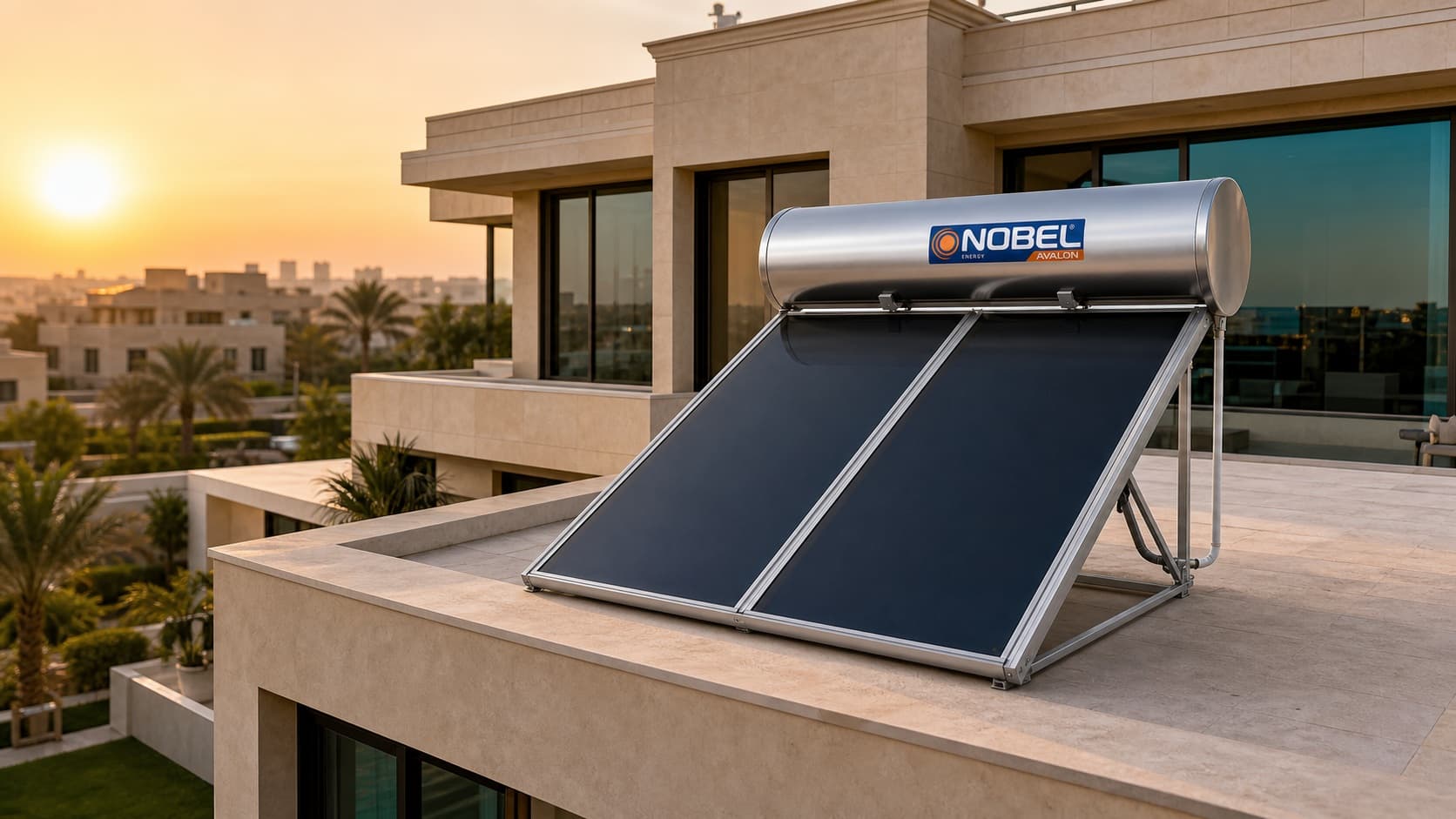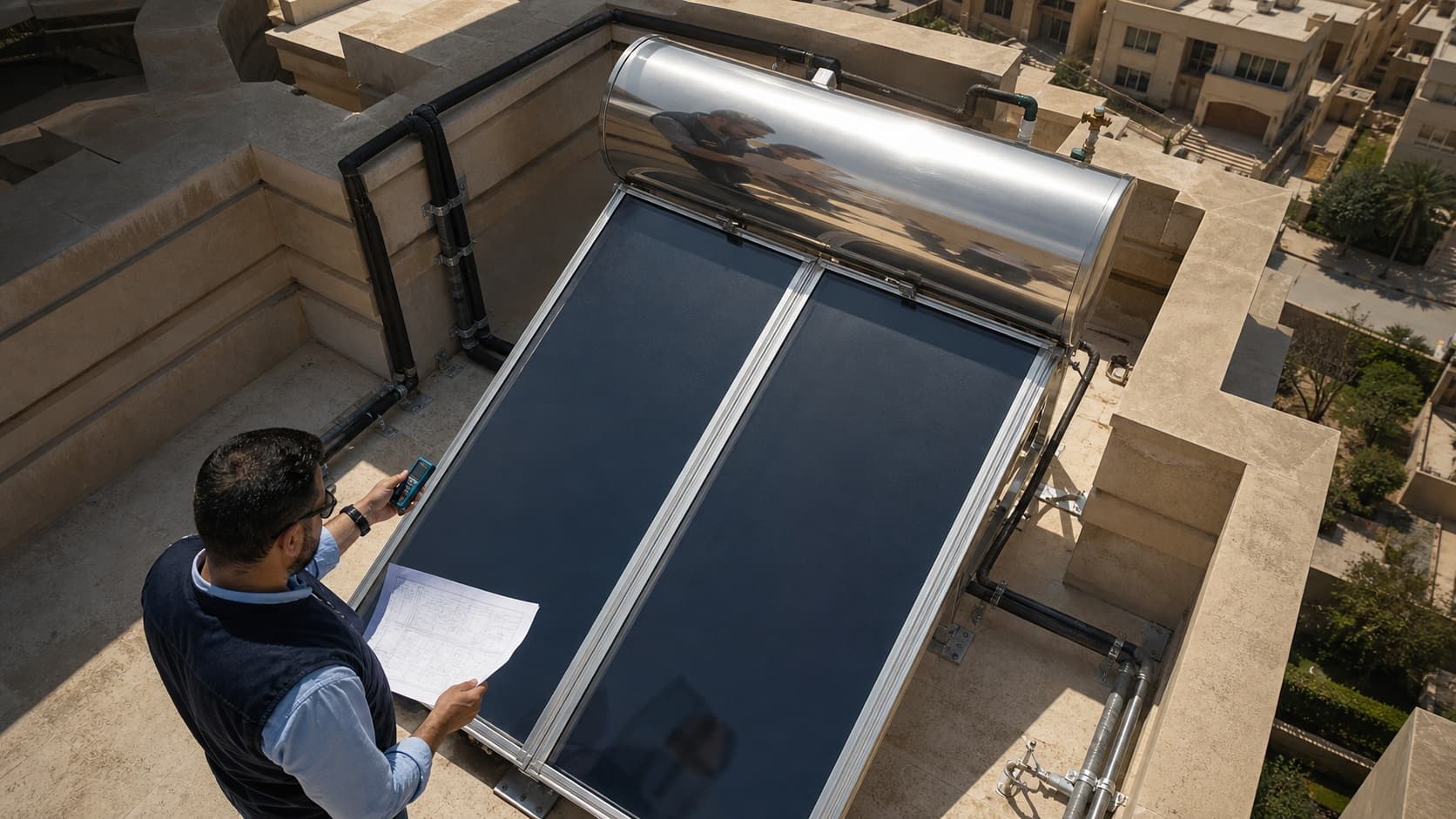

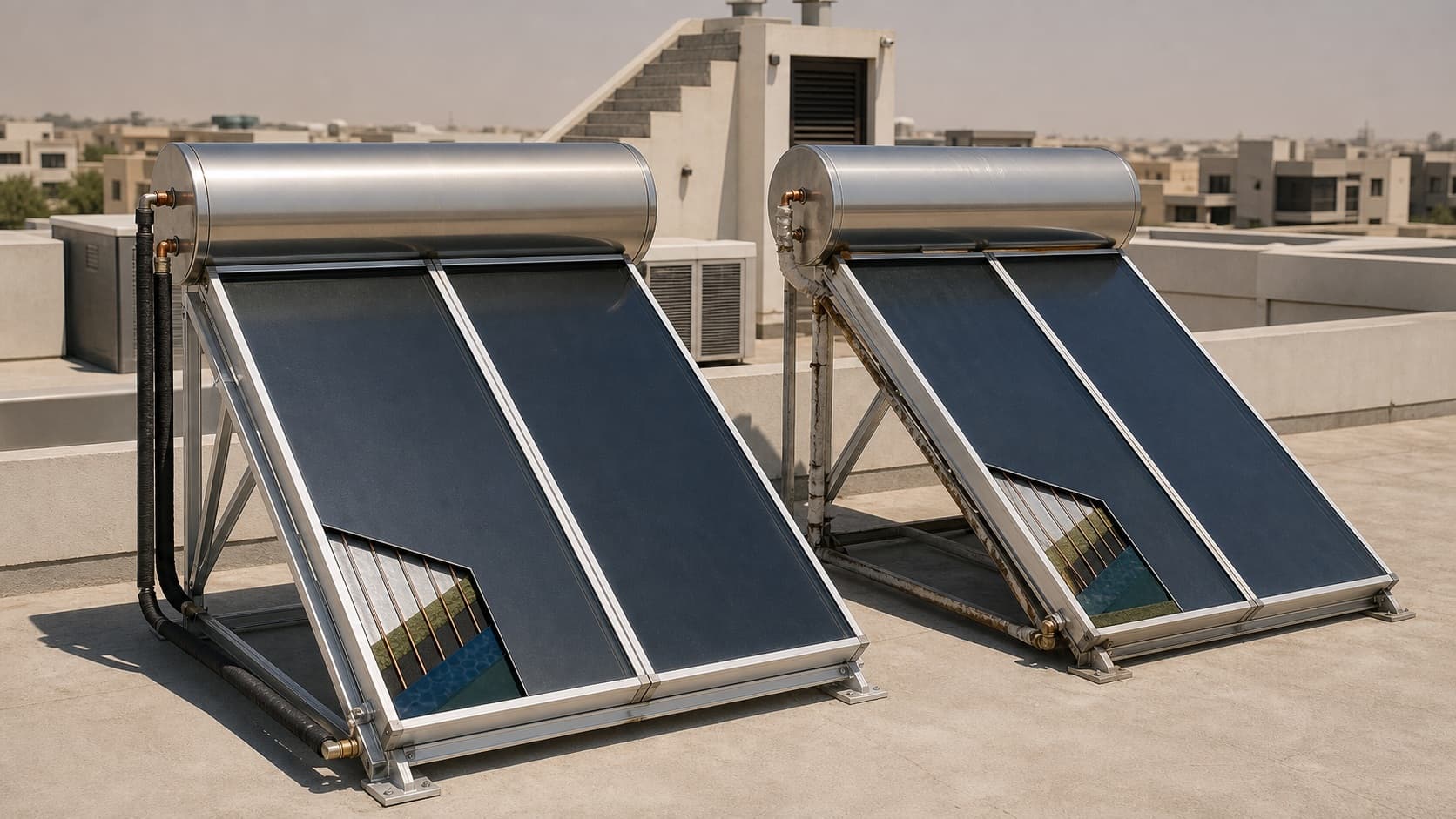
The difference between a solar heater that lasts you a decade and one that starts giving you trouble after a season or two isn't the logo on the box — it's manufacturing details you can check yourself before you pay. Cheap and reputable heaters look almost identical from the outside; the real difference only shows once you open the panel cover or ask the right questions. This checklist is built around the points that actually decide whether a heater will run reliably for ten-plus years or start failing on you after the first winter or two. If a seller can't answer any of these clearly, that alone is reason enough to look elsewhere.
1. The tank: material and insulation
Ask about the tank's inner material and the thickness of the outer insulation layer. Good insulation is what keeps water hot for hours after sunset — it works by minimizing heat loss to the surrounding air, not by storing sunlight. A poorly insulated tank cools noticeably faster than it should, especially on cold nights and early mornings. Ask to see the tank yourself during the inspection before installation — don't settle for a catalog photo. It's the same test you'd apply when judging how trustworthy an installation company is: a company confident in its product won't hesitate to show it to you honestly.
Why this is genuinely hard for an ordinary buyer to judge
The core problem with solar heaters is that you can't see inside them. The tank is sealed, the panels look similar from the outside, and every seller will tell you their product is excellent — the real differences are in internal components that don't show at a glance. That's why the fix isn't judging with your eyes alone; it's asking specific questions, insisting on clear answers, and asking to see what's behind the claims whenever that's possible.
2. The panels: glass and build quality
Panels have to sit exposed to sun, heat, dust, and rain for years without losing efficiency. The quality of the glass covering the panel, and how well the frame and internal seals are assembled, genuinely affect how long that holds true. A panel with weak assembly starts losing efficiency early — you'll notice the water getting less hot over time for no obvious reason.
The different product tiers exist precisely because of this gap. The economy range offers a more affordable option for a tight budget, while higher tiers invest in stronger glass and assembly so they keep performing steadily for more years. If you want to see the practical difference in build specs, compare an economy model against something like the Nobel Apollon solar heater — the written specs on each model explain why the price differs.
3. Is there a magnesium anode?
Ask directly: is there a magnesium anode inside the tank? Its job is to protect the tank from the scale and corrosion that build up over time from minerals in the water. Without it, the tank slowly corrodes from the inside, and you usually won't notice until the symptoms show up outside — a leak, visible rust, or oddly colored water. A missing anode, or a seller who hesitates to answer this, is a clear warning sign. The full picture of its role and the rest of routine maintenance is in solar heater installation and maintenance.
Why this difference actually matters
A solar heater isn't something you swap out every couple of years like a small appliance — it's an investment that's supposed to run safely and efficiently for many years. When you buy a low-quality heater, you're not just paying for it once; you're paying again in repeated maintenance calls, in days without hot water, and possibly in leak damage to your roof. Checking before you buy is far cheaper than fixing a problem after it happens, which is exactly why the time you spend asking these questions during the inspection isn't wasted time.
4. Is the warranty written and specific
A real warranty is written into an invoice or contract, and it states exactly what it covers — the tank alone? The panels? The backup electric element? — and for how long. If the answer is "don't worry, we've got you" with no paper to back it up, that's not a warranty, that's just talk. Any serious company activates the warranty formally right after installation rather than leaving it vague — if you want to understand how that's supposed to work in practice, see warranty activation.
5. Does the backup electric element actually work?
Make sure there's an automatic backup element that kicks in when sunlight drops — during winter and on cloudy days. Without a properly working backup element, you'll find yourself without enough hot water for large stretches of the year, and this is one of the most common complaints about low-quality solar heaters. For a broader look at the faults that show up over time in poorly built heaters, see solar heater faults and fixes.
6. The frame and connections: details you won't see at a glance
There's a sixth point that gets far less attention but matters just as much: the material of the frame holding the panels on the roof, and the quality of the connections between the panels and the tank. A frame that corrodes quickly under sun and humidity weakens over time and loosens the panels' mounting, and cheap connections between parts are usually the first thing to leak as pressure shifts between summer and winter. You won't notice this on day one — it shows up after a winter or two, which is exactly why it needs checking at the inspection stage, not after installation. Ask what metal the frame is made of and how the connections between the tank and panels are secured, even if the answer gets a little technical — the fact that the seller can explain it clearly is itself a good sign.
Installation is part of the quality, not a separate step
Even an excellent heater is wasted by a bad installation. The mounting angle of the panels, how securely they're fixed to the roof, and how well the pipe entry points into the roof are sealed — all of these determine whether the heater runs at full efficiency and whether your roof stays leak-free through the first rainy season. A rushed or undertrained installer can ruin the best heater on the market, which is why it's worth understanding exactly what should happen step by step during installation itself.
So how do I actually check all this?
These points aren't theoretical — they need to be checked in person during the inspection, not over the phone. The easiest way is to turn them into a short checklist you bring with you:
- Ask to see the tank and panels in person before you agree to anything.
- Ask about the tank material and insulation thickness by name, not vague phrases like "good insulation."
- Confirm the magnesium anode exists with a direct question.
- Get the warranty in writing on an invoice or contract before paying any deposit, with the duration and coverage clearly stated.
- Ask who will install it and whether they have enough experience — not just who's selling it.
And if you already own a heater and it's started showing odd symptoms — less hot water, strange noise, a leak — the list in solar heater faults and fixes helps you tell a normal fault apart from a sign that the quality was weak from the start.
You don't need to be a technician to ask these questions. You just need to not hesitate to ask them.
Book a free inspection and we'll show you the difference in person, or find your right capacity for your home first if you're still comparing options.
Frequently Asked Questions
What's the most important thing to check before buying?
Tank material and insulation thickness, and whether a magnesium anode protects it from scale — these matter most to lifespan.
Is a verbal warranty enough?
No, it needs to be written in an invoice or formal contract, specifying exactly what it covers and for how long.
Can I judge quality myself?
Partly — ask these questions and ask to see the tank; the rest gets confirmed during the engineering inspection.
Why does the magnesium anode matter so specifically?
Without it, minerals in the water slowly corrode the tank from the inside, and the symptoms — a leak or visible rust — don't show up until it's already advanced.
The seller refused to show me the tank before installation — what does that mean?
A clear negative signal. Any company confident in its product's quality won't mind showing it to you during the inspection.
Got a question about what you just read?
Talk to Aurora's team directly for a straight answer — or book a free site inspection if you're ready.